
Overview
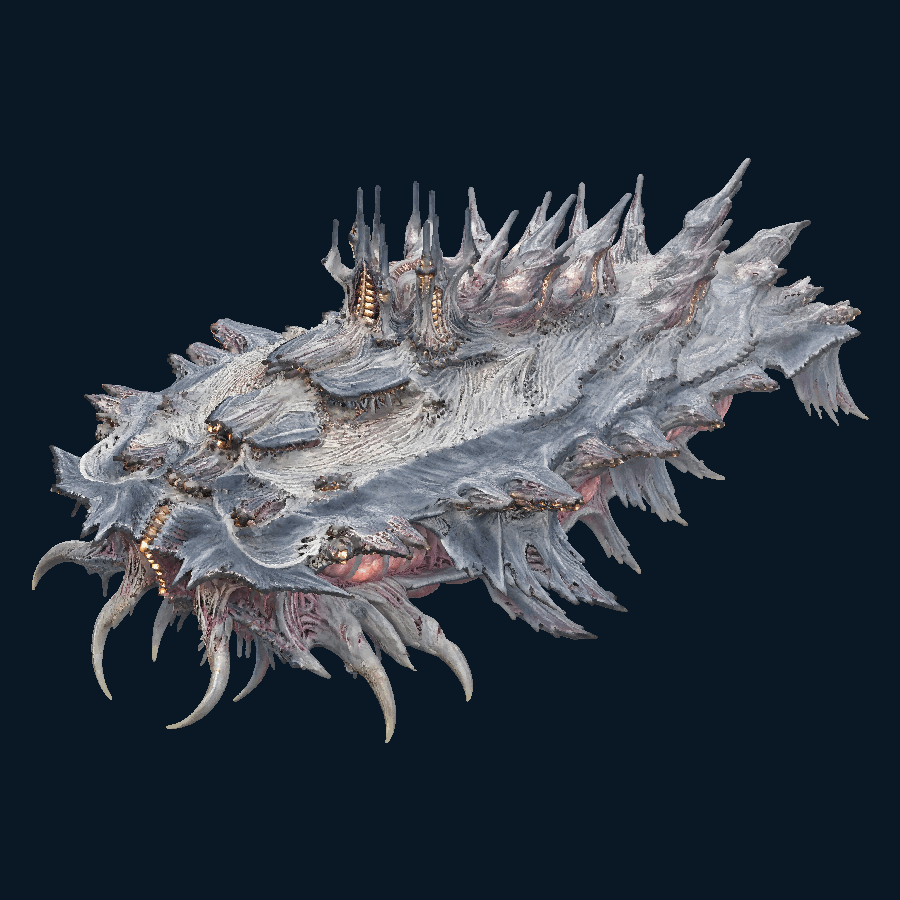
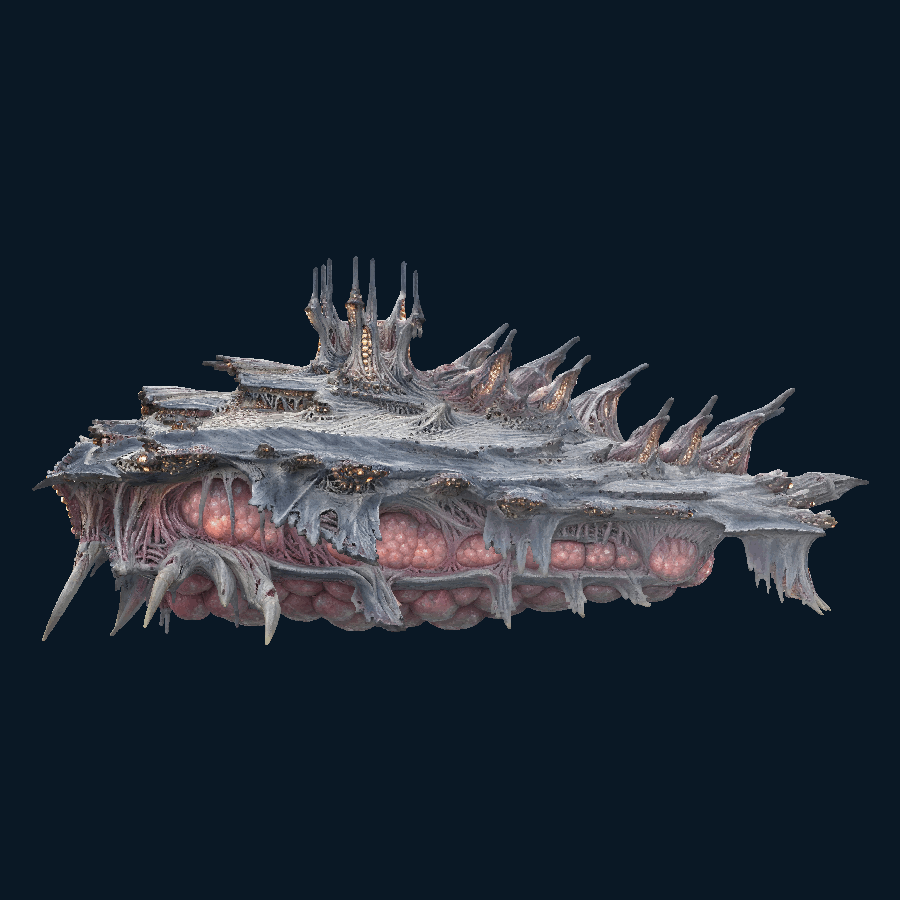
Broodwake Colossus is a Brood-tier surface war organism of the Bugvex Stormwake Colossus family. A low-floating armored body carries protected nursery districts, support-fire organs and command tissues, allowing a marine brood to grow and regroup while its living base remains in motion.
Organism Profile
Dimensions & Scale
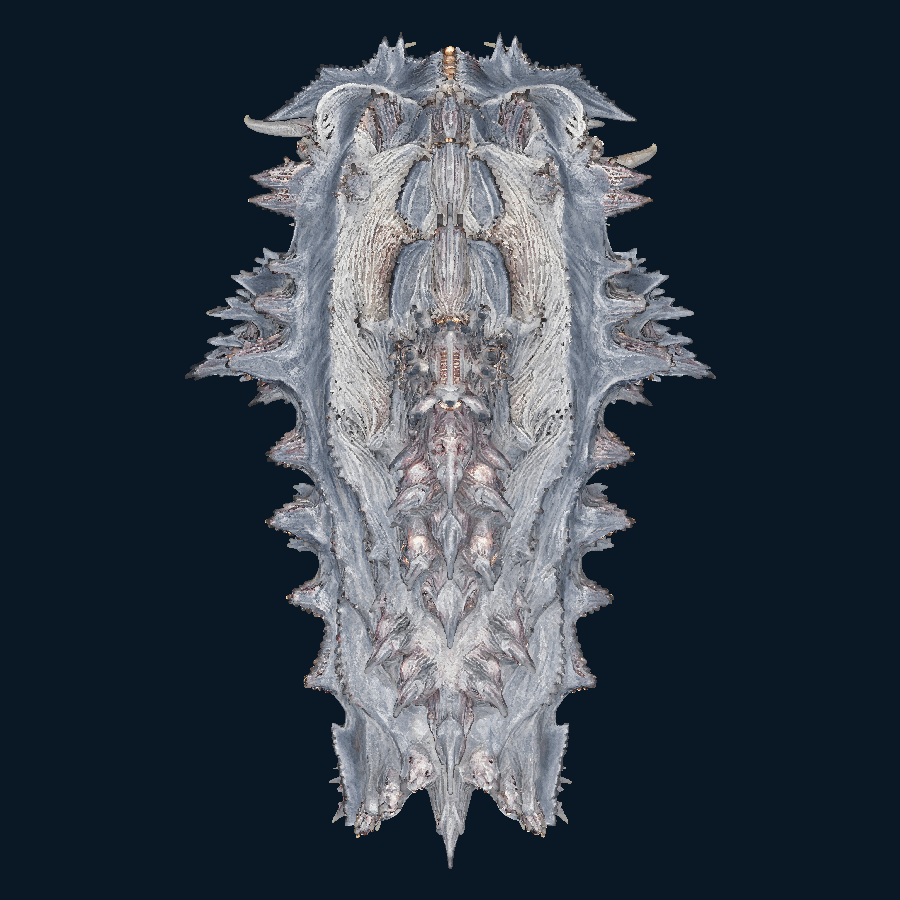
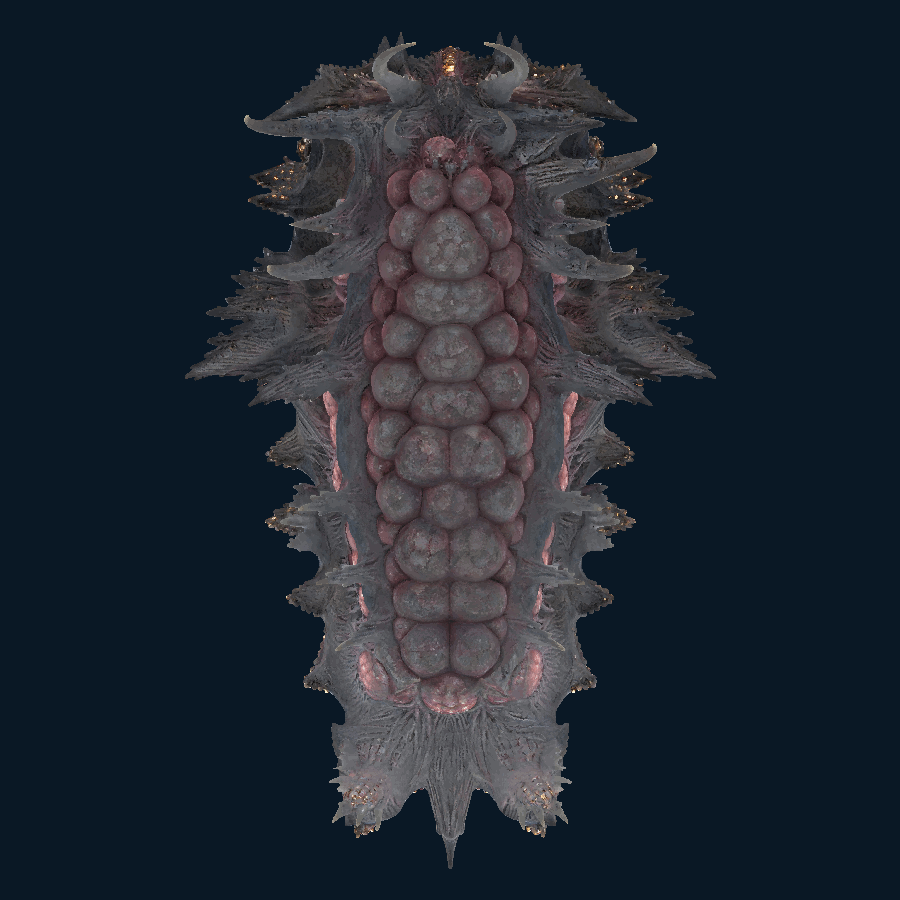
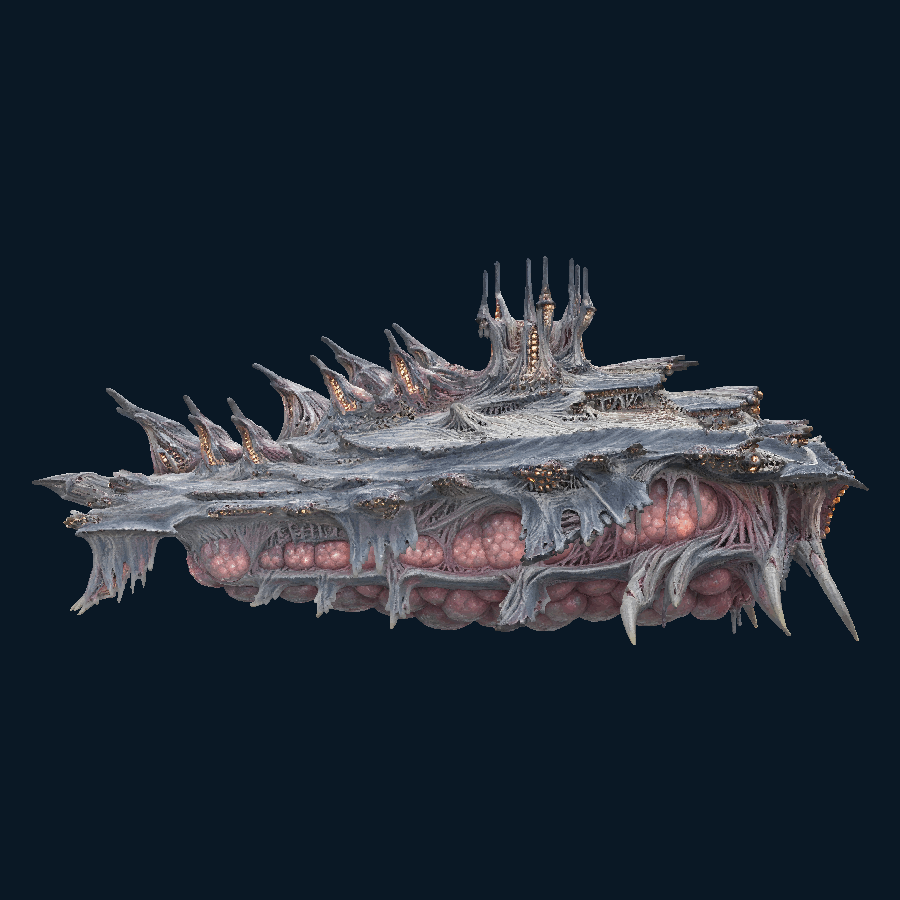
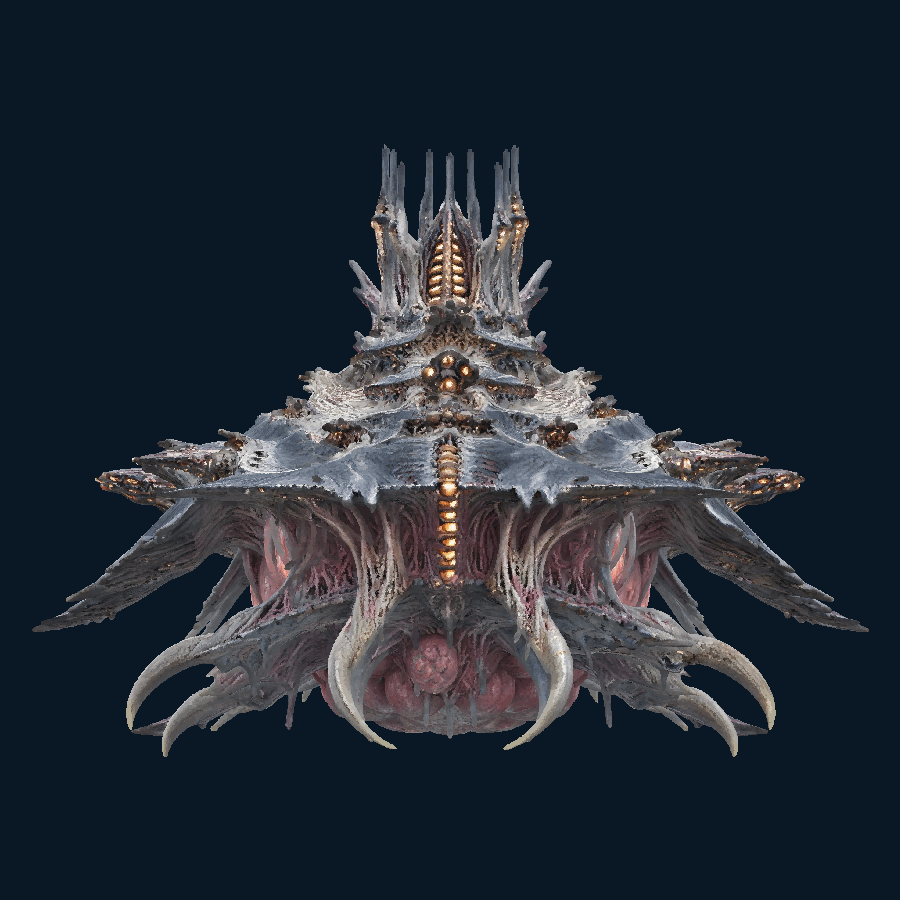
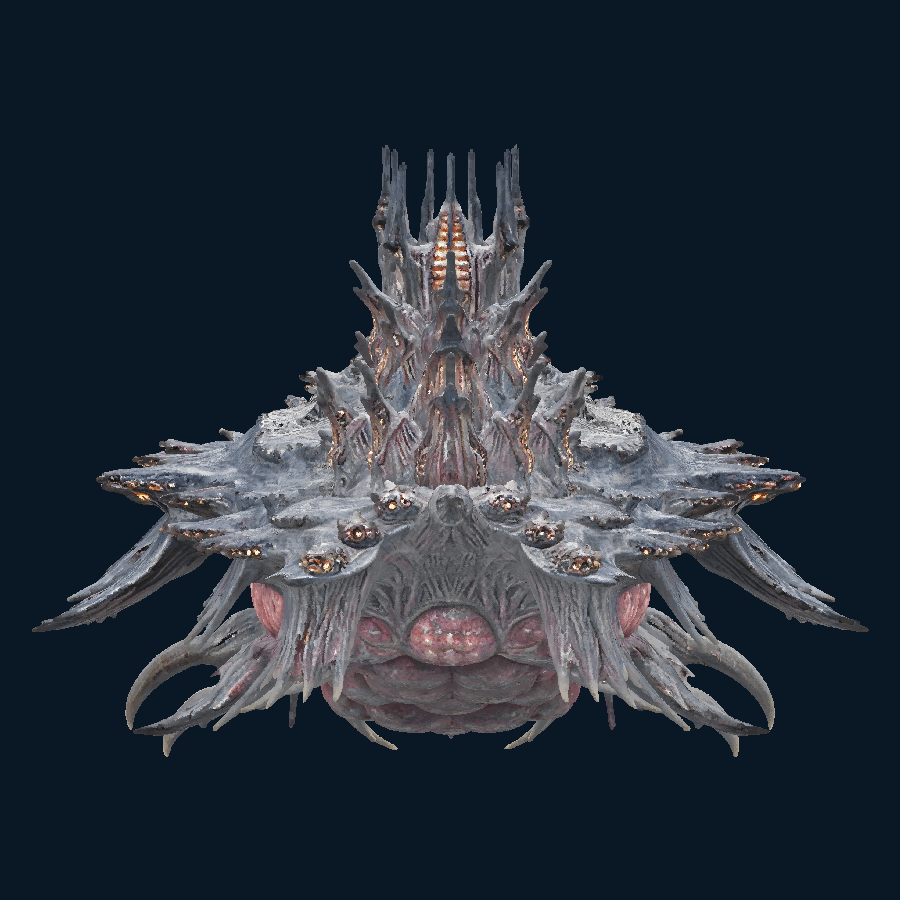
Length 52.5 m × Width 33.3 m × Height 24.4 m. Proposed concept dimensions use the midpoint of the supplied size range and the supplied visual proportions; height includes the full body and appendages.
Proposed surface living displacement: approximately 12,000 ton (metric tons). Fictional estimate based on size, anatomy and operating environment; not measured performance.
Weapons & Armament
Heavy spine batteries and integrated support-fire organs cover brood deployment. Shock tissues discourage close attackers, while release districts introduce smaller warforms into nearby water. Command organs coordinate these defenders around the mobile hatchery.
External Anatomy
Massive ridges rise above a broad living platform. Thick roots connect combat districts and nursery regions to the buoyant central body, while flexible lower tissues manage displacement travel. Protective growths shelter vulnerable brood openings without forming a conventional ship hull.
Functional Architecture
Nursery chambers share nutrient circulation with armored support tissues. Proposed separated brood districts allow staged development and release, while command tissues balance defense with recovery. Buoyancy organs and muscular trim regions keep the living platform stable during movement.
Technical Specifications
Offensive rating: 63/100 — Heavy spine batteries and integrated support-fire organs cover brood deployment
Defensive rating: 78/100 — Armored ridges protect nursery districts, supported by brood screens and close-range shock organs
Mobility rating: 20/100 — Slow heavy-displacement travel carries the hatchery across the sea surface and produces a substantial wake
Tactical cognition rating: 76/100 — Nursery chambers share nutrient circulation with armored support tissues
Endurance rating: 83/100 — Slow movement and a conspicuous wake make concealment difficult
Fleet support rating: 94/100 — A moving hatchery sustains a surface formation without requiring every brood to return to a fixed nesting site
Battlefield Role
Mobile titan hatchery. Broodwake Colossus is a Brood-tier surface war organism of the Bugvex Stormwake Colossus family. A low-floating armored body carries protected nursery districts, support-fire organs and command tissues, allowing a marine brood to grow and regroup while its living base remains in motion.
Maritime Operations
Slow heavy-displacement travel carries the hatchery across the sea surface and produces a substantial wake. Flexible submerged tissues provide gradual corrections. Surface warfare is its assigned domain; sustained deep diving and flight are not specified.
Defense Architecture
Armored ridges protect nursery districts, supported by brood screens and close-range shock organs. Distributed circulation allows damaged outer tissue to be isolated while core growth chambers remain active.
Operational Limits
Slow movement and a conspicuous wake make concealment difficult. Rough seas disrupt brood release and increase strain on exposed districts. Maintaining developing organisms consumes large nutrient reserves, and damage near a nursery can interrupt replacement cycles.
Strategic Strengths
A moving hatchery sustains a surface formation without requiring every brood to return to a fixed nesting site. Heavy protection and multiple support districts let it recover survivors while maintaining local defensive coverage.
Capability Assessment
Proposed fictional doctrine profile: A moving hatchery sustains a surface formation without requiring every brood to return to a fixed nesting site. Heavy protection and multiple support districts let it recover survivors while maintaining local defensive coverage. Ratings describe intended battlefield roles rather than measured performance.
B · 69.0
Fleet-wide concept rating, 0–100; not simulated performance. Specialized strengths do not imply an equally high overall grade. Tactical Cognition describes sensing, coordination and command. Grade is the equal-weight mean: S ≥ 90, A ≥ 75, B ≥ 60, C ≥ 45, D < 45.
Technology Level
T0 — buoyant marine biology, armored nursery systems and local brood command
Weapon Class
Proposed W1 — formation-scale support fire and close surface defense
T0 planetary · T1 system flight · T2 phase travel · T3 limited world engineering. W0 point defense · W1 ship combat · W2 heavy fleet combat · W3 strategic theater systems. Technology and weapon classes are independent of the profile grade.
History & Lineage
Universe lore · authored service history
Origin
Grown to support extended surface campaigns in which marine broods must replenish while their formation changes position
Lineage & Branch
Stormwake Colossus family, Brood variant. Nursery capacity and coordinated release define its role alongside surface assault warforms.
Brood or Swarm
Bugvex — Marine Warforms
Individual History
The Moving Nest — In this authored account, a Broodwake crosses a damaged coastal supply route with several nursery districts sealed against heavy seas. Its escorts hold close while the command tissues delay brood release until calmer water is reached.
The Second Tide — When the formation reaches a protected channel, the hatchery releases a fresh screen and recovers exhausted survivors beneath its armored ridges. It resumes movement before the defenders can fix its position, carrying the next generation with it.