
Overview
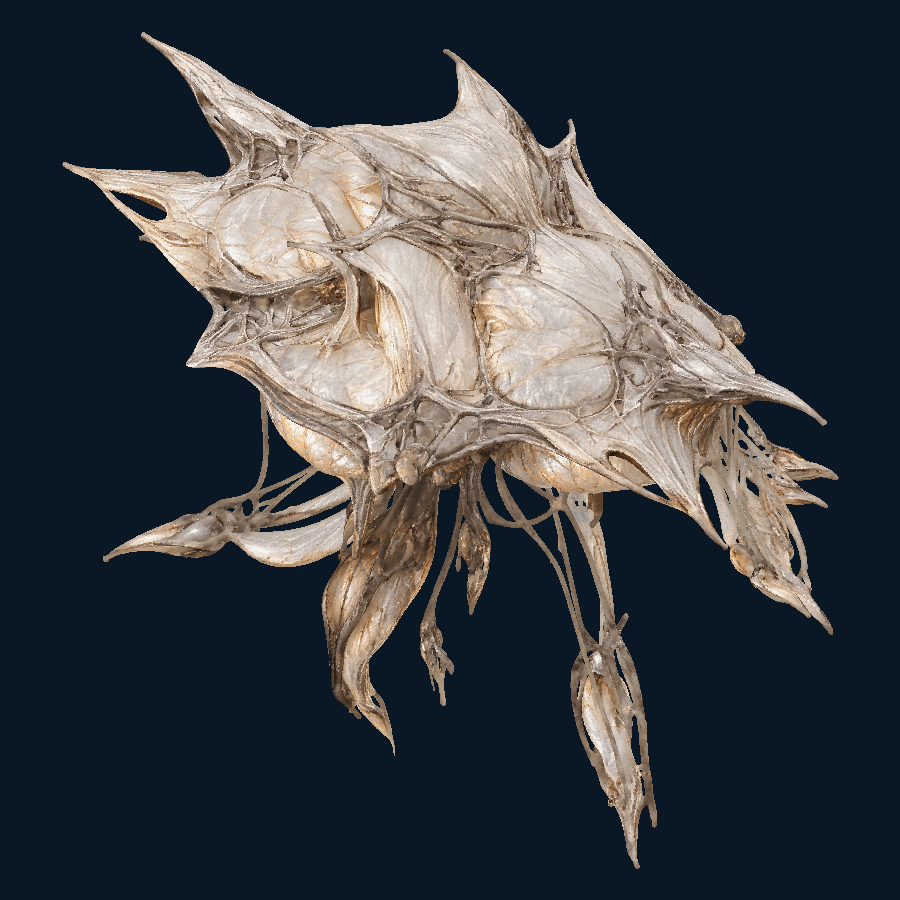
Cloudmother Floater is a Prime-tier Bugvex atmospheric support organism of the Driftspore Floater family. Gas-bearing organs hold its sensory membranes above the battlefield, allowing it to seed spores and coordinate dispersed organisms while drifting with minimal disturbance.
Organism Profile
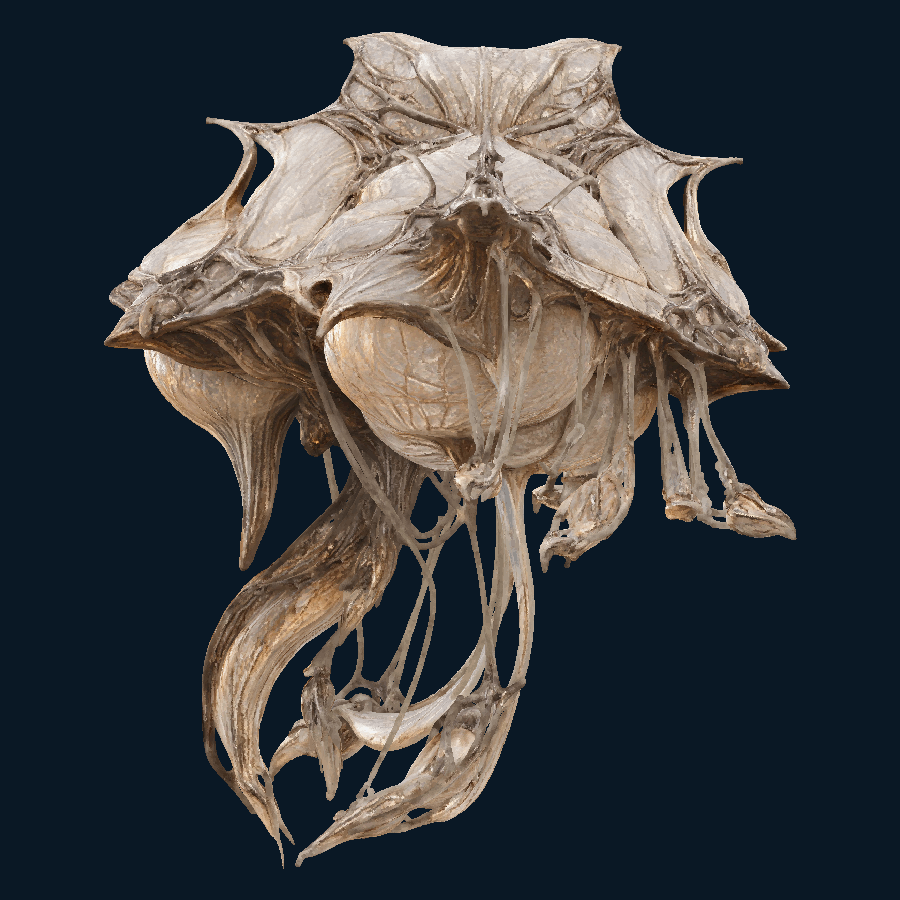
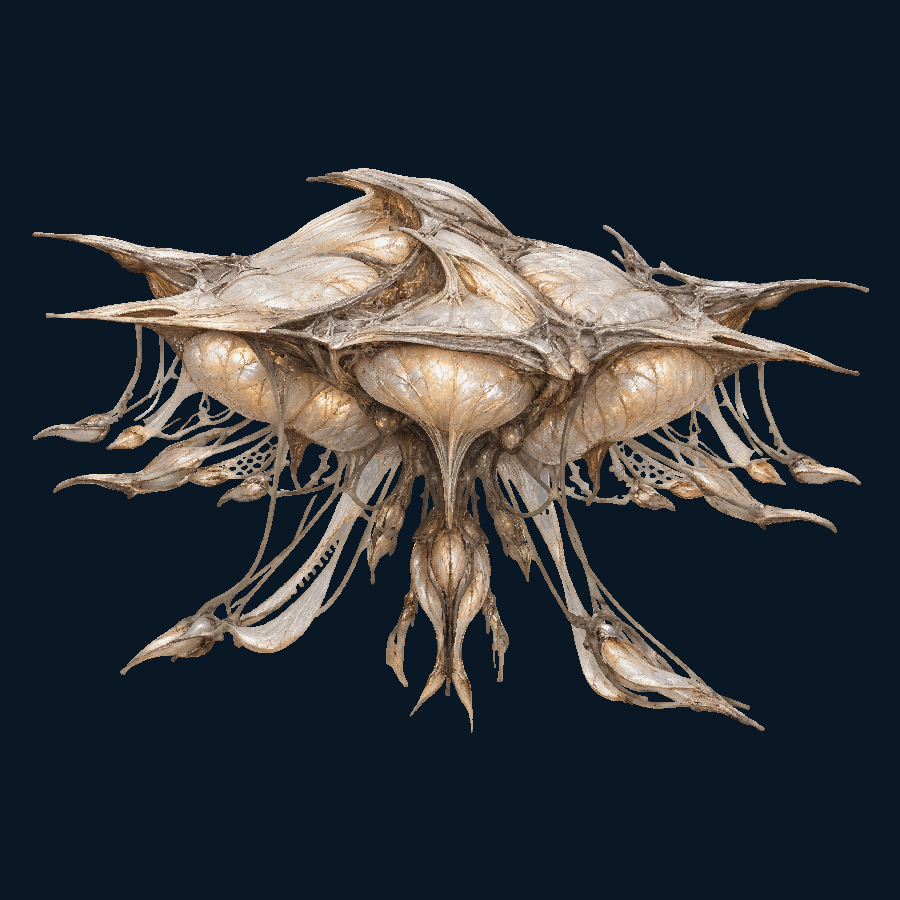
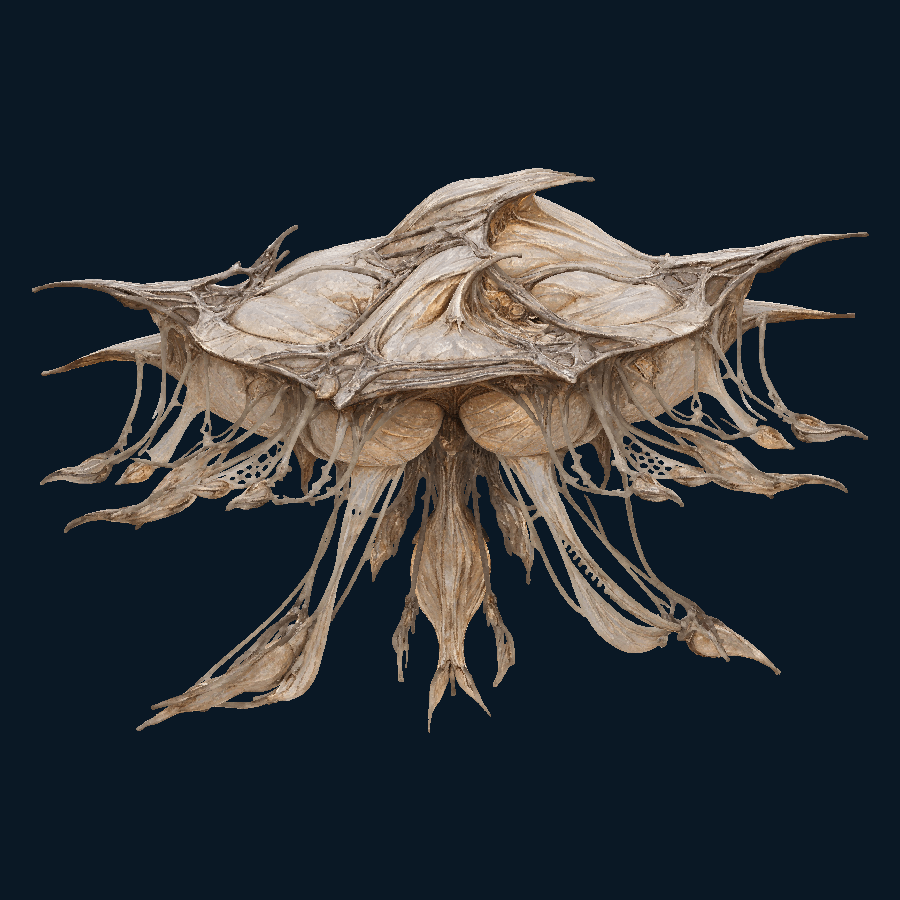
Dimensions & Scale
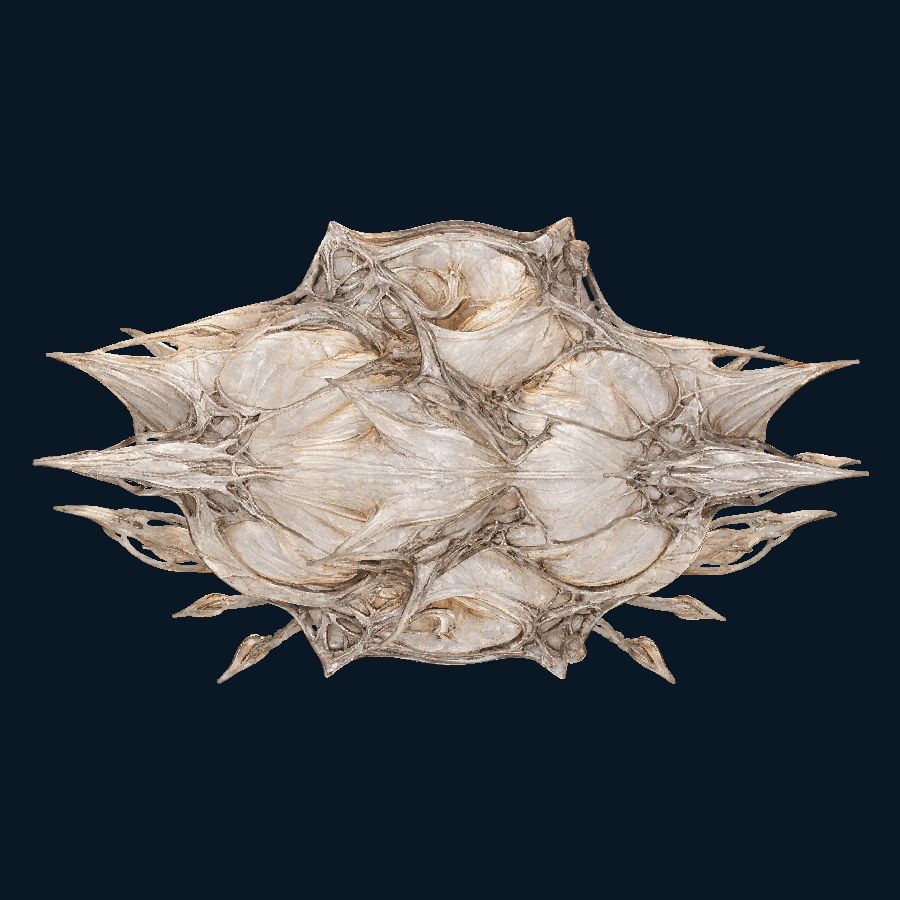
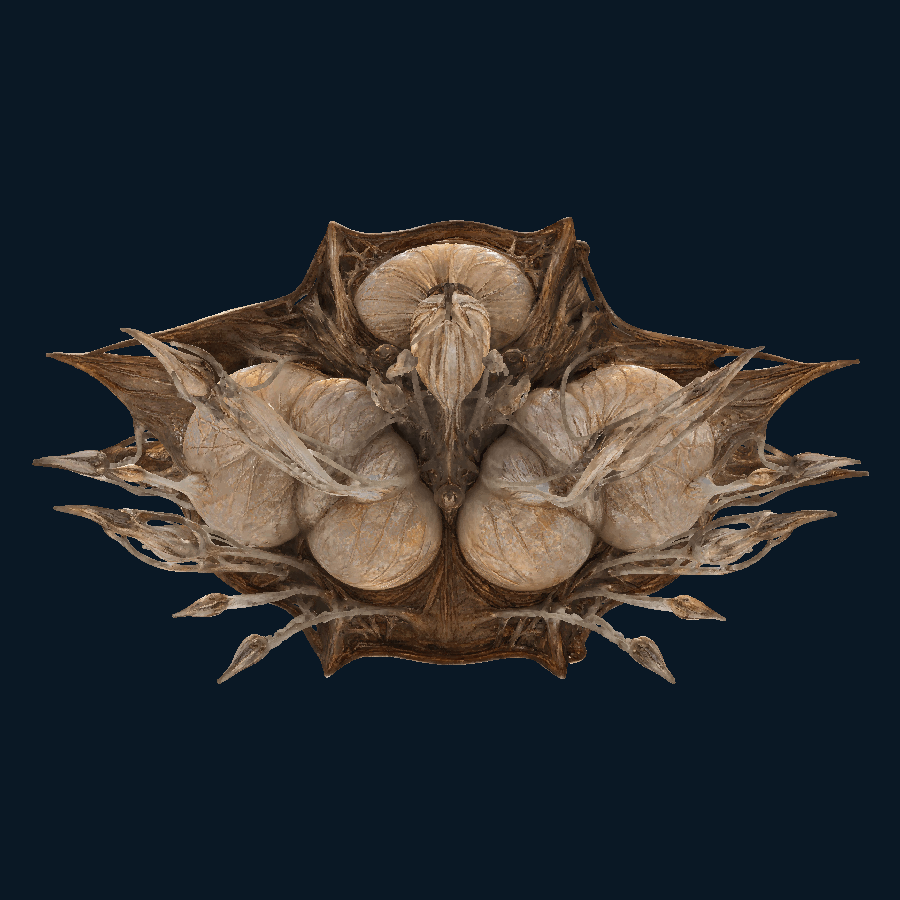
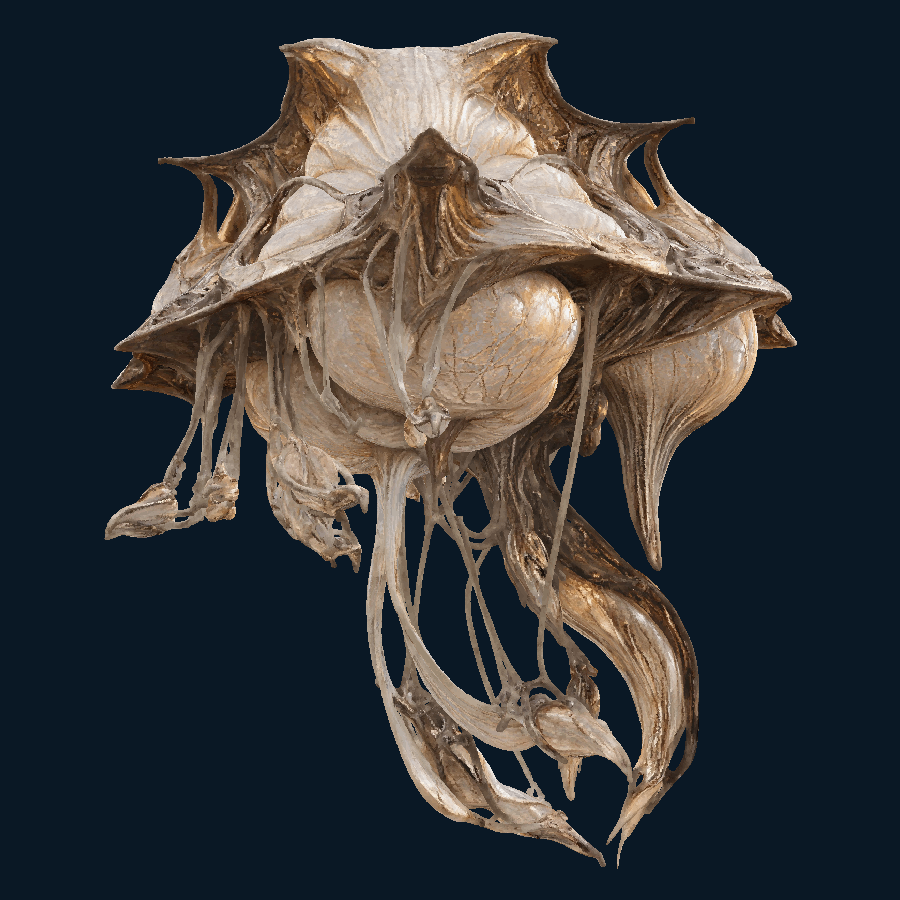
Length 13.9 m × Width 25 m × Height 16.9 m. Proposed concept dimensions use the midpoint of the supplied size range and the supplied visual proportions; height includes the full body and appendages.
Proposed living flight mass: approximately 2.4 ton (metric tons). Fictional estimate based on size, anatomy and operating environment; not measured performance.
Weapons & Armament
Spore-release organs seed selected areas and produce a concealing sensor haze. Observation bio-organs guide nearby warforms toward detected movement. These systems emphasize support and disruption; heavy armor-piercing weapons are not assigned.
External Anatomy
Pale buoyancy lobes sit inside a continuous network of ribs and tension-bearing tissues. Stabilizing vanes extend from thick roots, while sensory membranes hang beneath the central body. Its broad span supports distributed observation rather than an armored assault profile.
Functional Architecture
Proposed compartmented gas organs regulate lift while local nerve clusters coordinate the hanging sensors. Nutrient circulation feeds the broad membranes and replenishes spore stores. A central coordination web filters observations before passing short-range biological cues to associated warforms.
Technical Specifications
Offensive rating: 24/100 — Spore-release organs seed selected areas and produce a concealing sensor haze
Defensive rating: 30/100 — Separated buoyancy regions provide limited redundancy
Mobility rating: 35/100 — Silent buoyant drift provides the primary atmospheric movement
Tactical cognition rating: 84/100 — Proposed compartmented gas organs regulate lift while local nerve clusters coordinate the hanging sensors
Endurance rating: 69/100 — Slow powered movement leaves it vulnerable to strong winds and fast interceptors
Fleet support rating: 89/100 — Persistent observation and broad support coverage help dispersed ground and air organisms act together
Battlefield Role
Aerial support and coordination node. Cloudmother Floater is a Prime-tier Bugvex atmospheric support organism of the Driftspore Floater family. Gas-bearing organs hold its sensory membranes above the battlefield, allowing it to seed spores and coordinate dispersed organisms while drifting with minimal disturbance.
Atmospheric Operations
Silent buoyant drift provides the primary atmospheric movement. Small powered corrections and vane adjustments maintain orientation and altitude. Wind, air density and damaged lift organs affect station keeping. Vacuum operation is not part of the supplied design.
Defense Architecture
Separated buoyancy regions provide limited redundancy. Sensor haze obscures exact position, and distributed observation allows early withdrawal. The soft membranes require protection from nearby escort organisms.
Operational Limits
Slow powered movement leaves it vulnerable to strong winds and fast interceptors. Punctures reduce lift, while damaged sensory curtains degrade observation. Spore reserves are finite, and the organism cannot remain effective in every atmospheric composition.
Strategic Strengths
Persistent observation and broad support coverage help dispersed ground and air organisms act together. Low-disturbance drifting and distributed sensing make it useful behind a protected front.
Capability Assessment
Proposed fictional doctrine profile: Persistent observation and broad support coverage help dispersed ground and air organisms act together. Low-disturbance drifting and distributed sensing make it useful behind a protected front. Ratings describe intended battlefield roles rather than measured performance.
C · 55.2
Fleet-wide concept rating, 0–100; not simulated performance. Specialized strengths do not imply an equally high overall grade. Tactical Cognition describes sensing, coordination and command. Grade is the equal-weight mean: S ≥ 90, A ≥ 75, B ≥ 60, C ≥ 45, D < 45.
Technology Level
T0 — atmospheric biological flight, sensing and local coordination
Weapon Class
Proposed W0 — indirect battlefield support and localized biological disruption
T0 planetary · T1 system flight · T2 phase travel · T3 limited world engineering. W0 point defense · W1 ship combat · W2 heavy fleet combat · W3 strategic theater systems. Technology and weapon classes are independent of the profile grade.
History & Lineage
Universe lore · authored service history
Origin
Grown as the elevated coordination layer of a distributed Bugvex formation, prioritizing observation, atmospheric endurance and biological seeding over direct firepower
Lineage & Branch
Driftspore Floater family, Prime variant. Enlarged buoyancy organs support a wider sensory and coordination footprint.
Brood or Swarm
Bugvex — Atmospheric Warforms
Individual History
The Pale Canopy — In this authored account, a Cloudmother holds above a sheltered valley while scattered ground organisms regroup below. Its hanging sensors detect movement beyond a ridge, and the formation changes route before the approaching patrol gains a clear view.
The Falling Wind — A sudden downdraft forces the floater lower. It reduces spore release, folds its exposed sensory curtains inward and follows a protected air channel until its escort can rejoin it. The event illustrates how weather governs its support role.